
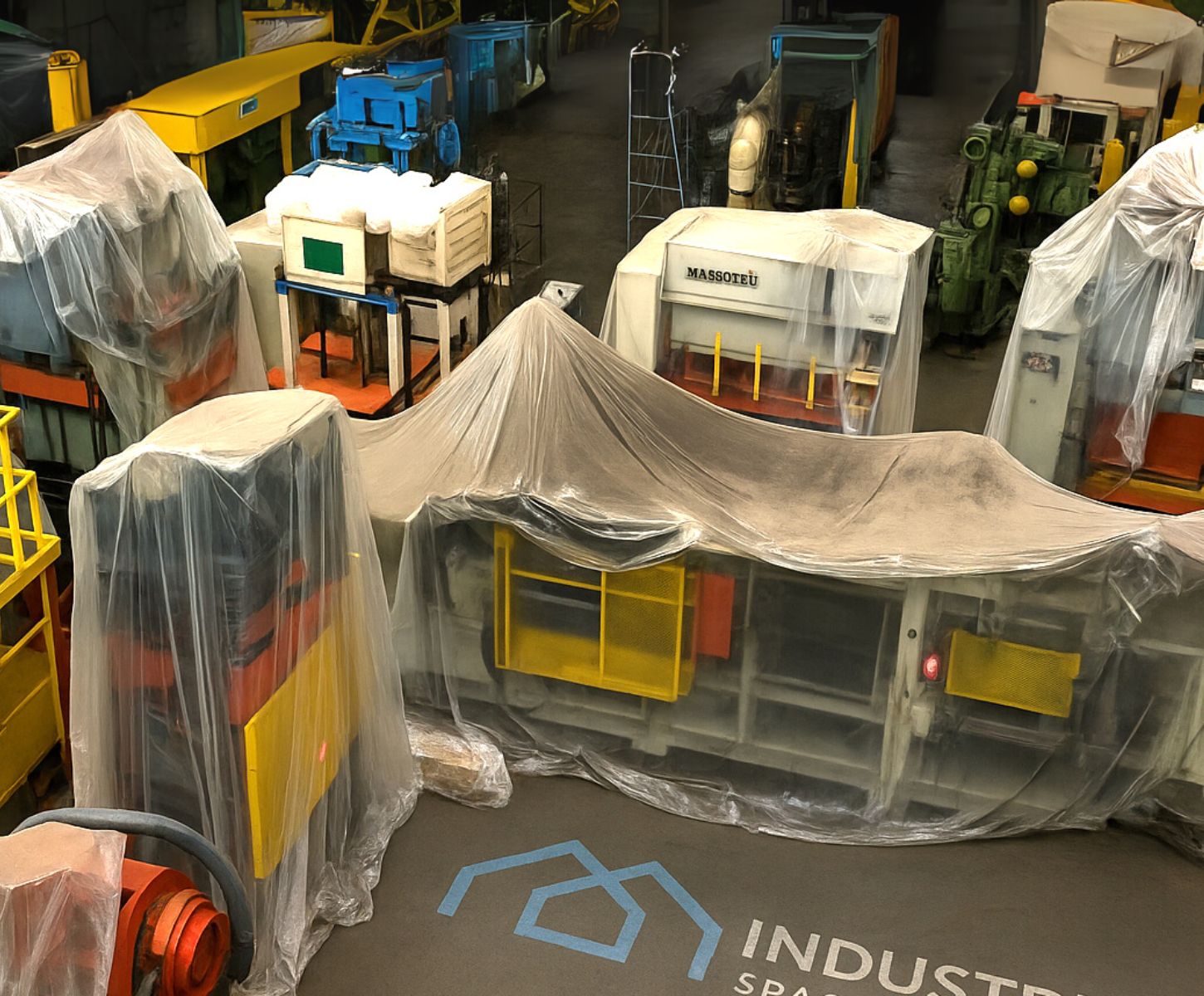

Industrial storage is designed around qualified business assets, practical footprints, delivery logistics, handling review, and documented access. Consumer self-storage is usually designed for personal goods and smaller loads. Machinery, oversized equipment, palletized materials, or commercial inventory should be evaluated by actual dimensions, weight, transport, handling, activity, and risk—not placed solely according to unit size.
Search results often group industrial facilities with mini-storage, vehicle storage, workshops, and household units. That creates confusion for companies and poor inquiries for providers. A storage unit may be appropriate for boxed office contents, while the same unit can be completely unsuitable for a production machine, palletized material, or equipment delivered by tractor-trailer. This guide gives business buyers a qualification framework and explains why Industrial Space Rentals serves commercial and industrial organizations rather than ordinary household self-storage customers.
Key Takeaways
- Use asset characteristics and logistics—not the word “unit”—to choose a facility.
- Industrial assets require verified dimensions, weights, delivery routes, and handling responsibilities.
- A low monthly unit price is not meaningful if the vehicle or item cannot be accepted.
- Daily work, repairs, retail activity, and unrestricted access are separate operating requirements.
- Confirm suitability, policies, insurance, handling, access, pricing, and capacity before delivery.
What Does Industrial Storage Versus Self-Storage Mean?
Short answer: Industrial storage focuses on approved commercial and industrial assets and their movement plan; self-storage typically provides a customer-controlled unit intended for smaller personal or business contents.
The facility design, doors, floor path, vehicle access, handling review, documentation, and permitted activities can differ substantially. The wording used in a search result can describe several very different property or service models, so a business should confirm the operating arrangement rather than relying on the label alone. Begin by writing a one-sentence description of the business problem, the assets involved, the desired start date, and the expected outcome. Describe the heaviest, largest, and most difficult item first, then list the remaining contents.
This distinction matters because a technically relevant building may still be operationally unsuitable. The limiting item often determines whether the overall requirement can be accepted. Record whether the requirement is storage-only, whether work will occur on site, who needs access, and whether items will move in one delivery or several scheduled deliveries.
Planning caution: A convenient location or advertised unit dimension does not prove that an industrial load can enter, move through, or rest safely in the space.
For the next step, review the industries and sectors served. Storage suitability, handling, access, insurance, terms, pricing, and availability must be confirmed directly before delivery.
Which Businesses and Situations Are a Good Fit?
Short answer: Industrial storage may fit approved machinery, equipment, business inventory, project materials, contractor assets, and oversized commercial items when the facility confirms the complete plan.
Self-storage may fit ordinary boxed records, office contents, or small goods when the operator permits the business use and no specialized logistics are involved. A useful inquiry describes the business purpose instead of asking only for a number of square feet. Group the requirement by asset type, operational urgency, sensitivity, and expected turnover. Classify contents by weight, size, sensitivity, value, handling, access, and permitted activity.
A clear fit assessment protects both the customer and facility from rushed assumptions. This exposes requirements that a simple unit-size comparison hides. Record the owner of the goods, their condition, packaging or protection, approximate value, and any restrictions that could affect acceptance.
Planning caution: Household self-storage is generally a poor assumption for heavy machinery, tractor-trailer deliveries, rigging, powered equipment, industrial materials, on-site work, or goods requiring facility-managed coordination.
For the next step, review machinery and heavy-equipment storage. Storage suitability, handling, access, insurance, terms, pricing, and availability must be confirmed directly before delivery.
How Should Space and Item Dimensions Be Calculated?
Short answer: Compare door openings and nominal unit dimensions with the complete transport envelope, turning path, floor loading review, lifting method, clearances, and retrieval sequence.
Floor area alone rarely describes an industrial requirement. Height, shape, centre of gravity, aisle clearance, packaging, protrusions, and the method used to position an item can change the practical footprint. Create an inventory with quantities and maximum dimensions, then identify which items can be stacked, nested, racked, or grouped. Measure crates, pallets, skids, guards, attachments, and protrusions in their storage configuration.
Accurate measurements support a realistic layout and prevent surprises at delivery. An item can fit inside a room yet fail at a doorway, corner, ramp, or unloading point. Record length, width, height, weight, quantity, packaging, photographs, lifting points, and any clearance required around each asset.
Planning caution: Do not infer structural capacity or safe handling from visible floor area.
For the next step, review commercial inventory storage. Storage suitability, handling, access, insurance, terms, pricing, and availability must be confirmed directly before delivery.
What Handling, Delivery and Access Details Must Be Confirmed?
Short answer: Industrial storage inquiries should identify carriers, trailers, lifting points, securement, unloading, placement, and retrieval; self-storage often expects the customer to move ordinary contents independently.
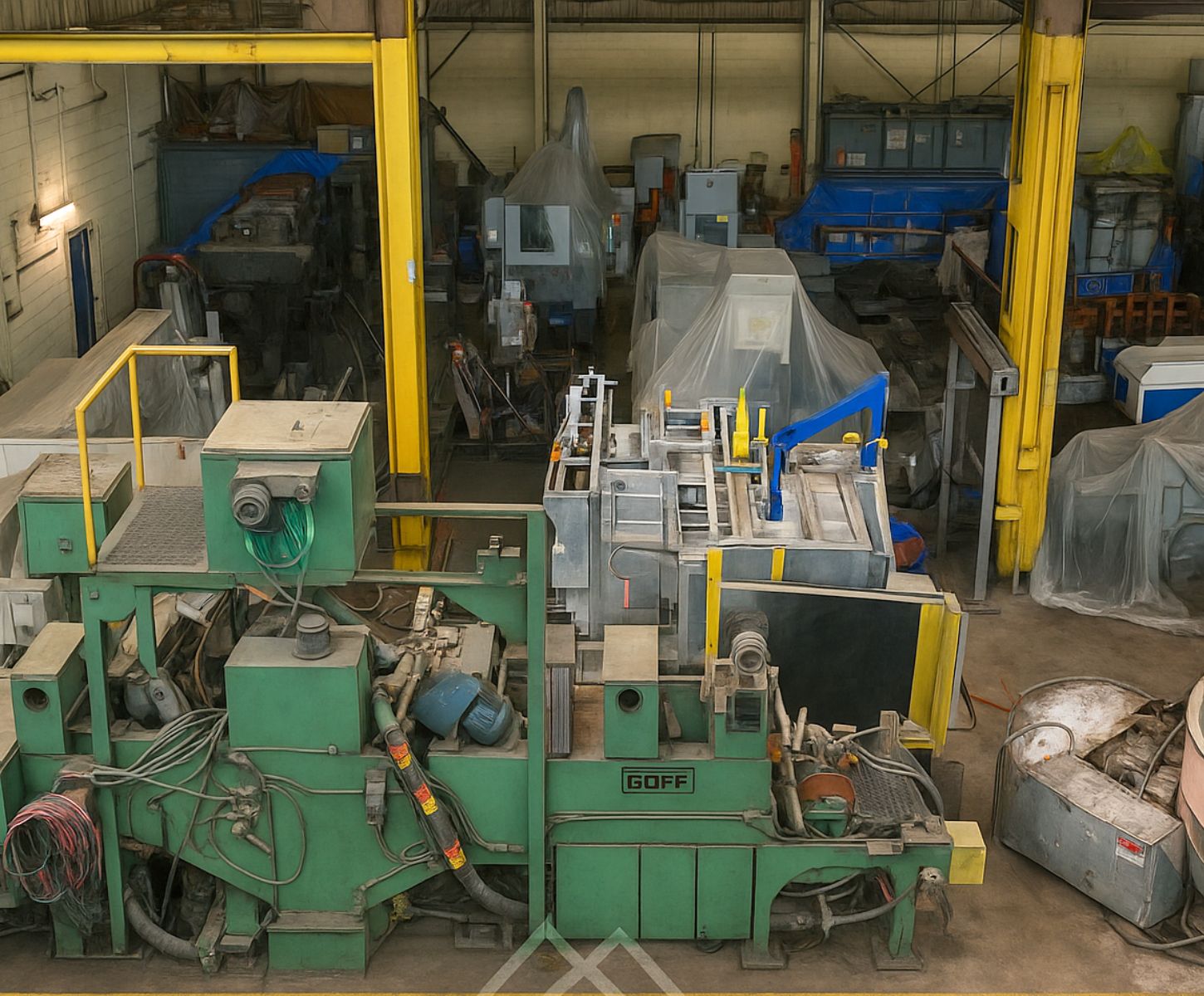
Handling is part of the storage plan, not an afterthought. Vehicle type, trailer configuration, loading orientation, lifting points, floor path, unloading sequence, and appointment timing can determine whether a proposed move is practical. Share the transportation plan early and identify the party responsible for loading, securement, rigging, unloading, placement, and later retrieval. Ask whether the provider reviews loads and coordinates appointments for unusual equipment.
Coordinating these details reduces delays, double handling, and unsafe improvisation. A planned handoff reduces risk to people, property, and the stored asset. Record carrier information, vehicle dimensions, arrival windows, lifting documentation, required personnel, and the proposed access frequency after move-in.
Planning caution: Never arrive with heavy or oversized equipment based only on an online reservation.
For the next step, review frequently asked questions. Storage suitability, handling, access, insurance, terms, pricing, and availability must be confirmed directly before delivery.
How Should Security, Condition and Responsibility Be Reviewed?
Short answer: Business assets need appropriate packaging, condition records, authorized contacts, insurance review, and a shared understanding of responsibility.
Security is broader than cameras or locks. A business also needs a documented inventory, condition photographs, named contacts, controlled access expectations, and a clear understanding of responsibility before, during, and after delivery. Discuss the sensitivity of the stored items, required environmental protection, packaging, inspection needs, insurance documentation, and emergency contacts. Match serial numbers, photographs, cases, pallets, attachments, and documents to the inventory.
A written record gives both parties a consistent reference if conditions, personnel, or timelines change. Industrial assets may have high operational value even when they are not new. Record serial numbers where appropriate, visible condition, packaging status, ownership documents, insurance contacts, and any special instructions supplied by the owner.
Planning caution: A security camera or locked door does not resolve undeclared contents, inadequate packaging, or insurance gaps.
For the next step, review facility information. Storage suitability, handling, access, insurance, terms, pricing, and availability must be confirmed directly before delivery.
How Should Timing and Access Be Planned?
Short answer: Access and duration should reflect how the business actually uses the assets, including scheduled inspection, retrieval, rotation, or project milestones.
The expected duration is only one timing factor. A facility also needs to understand the move-in window, delivery sequence, requested access, potential extensions, retrieval notice, and dependencies such as a project milestone or carrier booking. Build a simple schedule with decision dates, delivery dates, review points, and the expected removal window. Separate items needed frequently from those that can remain inactive.
A shared timeline makes capacity planning more reliable and helps the business avoid paying for rushed logistics. Frequent access can change the required layout and facility model. Record the earliest and latest acceptable move-in date, expected duration, access frequency, notice requirements to discuss, and the person authorized to approve changes.
Planning caution: Do not assume twenty-four-hour walk-in access or permission to work on stored assets.
For the next step, review industrial storage in Cambridge. Storage suitability, handling, access, insurance, terms, pricing, and availability must be confirmed directly before delivery.
What Factors Affect Pricing and the Final Storage Plan?
Short answer: Compare total outcome cost, including transport, handling, space efficiency, documentation, access, insurance, and the risk of selecting an unsuitable facility.
A meaningful quotation depends on the complete requirement. Two customers asking for the same nominal floor area may require different handling, layouts, access arrangements, administration, protection, or duration. Request pricing only after providing the inventory, schedule, handling plan, access expectations, and unresolved questions. Request a quotation based on the inventory and movement plan, not a generic unit size.
This produces a more useful consultation than comparing a single advertised rate that may not represent the actual requirement. The cheapest nominal unit can be the most expensive choice if delivery fails or assets must be moved again. Record what is included, what requires separate coordination, the assumptions used for the quotation, and the process for approving a change.
Planning caution: Pricing and accepted activities vary by provider and requirement.
For the next step, review a suitability consultation. Storage suitability, handling, access, insurance, terms, pricing, and availability must be confirmed directly before delivery.
Industrial Storage and Self-Storage Compared
The table describes common differences; confirm the actual provider’s policies.
| Factor | Industrial storage review | Typical self-storage decision |
|---|---|---|
| Contents | Commercial assets assessed individually | Ordinary permitted contents |
| Logistics | Vehicle, load, handling, and route reviewed | Customer moves items through standard access |
| Dimensions | Practical footprint and clearances | Advertised unit dimensions |
| Activity | Storage-related activity as confirmed | Usually no industrial operations |
| Inquiry | Specifications and consultation | Unit selection and reservation |
Examples of the Correct Facility Question
Replace “What size unit?” with a question that describes the actual business requirement.
Production Machine
Situation: A crated machine will arrive on a specialized trailer. Planning response: Ask an industrial provider to review dimensions, weight, lifting points, carrier, unloading, placement, and retrieval. Why it matters: Delivery and handling determine feasibility.
Boxed Office Records
Situation: A company has ordinary labeled boxes with no special handling. Planning response: Compare permitted business use, security, access, insurance, and unit conditions. Why it matters: The requirement may not need industrial infrastructure.
Palletized Spare Parts
Situation: Parts are held for a planned shutdown. Planning response: Confirm pallet count, dimensions, weight, packaging, project labels, access, and material handling. Why it matters: Project timing and traceability matter.
Daily Repair Activity
Situation: Technicians need to work on equipment every day. Planning response: Seek premises permitted and designed for workshop operations. Why it matters: Storage should not be assumed to allow daily work.
Business Storage Facility Screening Checklist
Use these questions before booking a tour or unit.
- Define the business reason for industrial storage versus self-storage and the desired outcome.
- Prepare a complete inventory rather than describing only the largest item.
- Record maximum dimensions and verified weights for machinery or oversized assets.
- Provide photographs that show condition, packaging, lifting points, and protrusions.
- Describe the delivery vehicle, trailer configuration, carrier, and unloading sequence.
- Identify who is responsible for rigging, loading, transportation, unloading, and placement.
- Explain how often authorized personnel may need access and what they need to do.
- Share expected move-in, review, extension, and removal dates.
- Ask which insurance, ownership, condition, and responsibility documents are required.
- Obtain written confirmation of suitability, policies, pricing, handling, access, and availability before dispatch.
A complete request helps the facility assess fit without guessing. If information is not yet available, identify what remains unknown and arrange a consultation through the pricing and availability page.
Frequently Asked Questions
Is industrial storage versus self-storage the same as renting a warehouse?
No. Industrial storage, self-storage, and warehouse leases are different arrangements. The correct choice depends on assets, activities, access, logistics, responsibility, and duration.
What information should a business provide first?
Provide the item types, quantities, dimensions, weights where relevant, photographs, delivery method, desired dates, access expectations, handling needs, and a business contact. The facility can then identify missing information and discuss whether the request may be suitable.
Can pricing be confirmed from square footage alone?
Usually not. Pricing can depend on footprint, configuration, duration, handling, access, administration, item characteristics, and current capacity. Contact Industrial Space Rentals with the complete requirement for a tailored discussion.
Can customers access stored items whenever they want?
Access arrangements must be discussed and confirmed for the specific storage plan. Do not assume that storage provides unrestricted daily workspace, operating access, or walk-in retrieval.
What items or conditions may not be accepted?
Suitability is reviewed individually. Provide accurate information about contents, ownership, condition, dimensions, weight, packaging, hazards, insurance, handling, and access. The team will explain applicable conditions and policies before delivery.
How far in advance should a company inquire?
Contact an industrial provider before selecting a carrier or committing to a delivery date. Ordinary boxed contents may require less lead time, but provider policies still apply.
Serving Industrial and Commercial Organizations Across Southern Ontario
Industrial Space Rentals is located at 200 Beverly Street in Cambridge, Ontario. The facility serves qualified organizations from Cambridge, Kitchener, Waterloo, Guelph, Hamilton, Burlington, Brampton, Mississauga, London, and other Ontario markets when the storage requirement fits the facility. Start with the Cambridge industrial storage page, explore who we serve, and contact the team to confirm conditions and policies.
Discuss Your Storage Requirement
Describe the business, contents, dimensions, weights, photographs, transport method, desired dates, access, and any work you expected to perform so the team can determine whether the request fits industrial storage. Call (416) 707-0326 or (647) 209-4027, or use the contact form to request a consultation.