
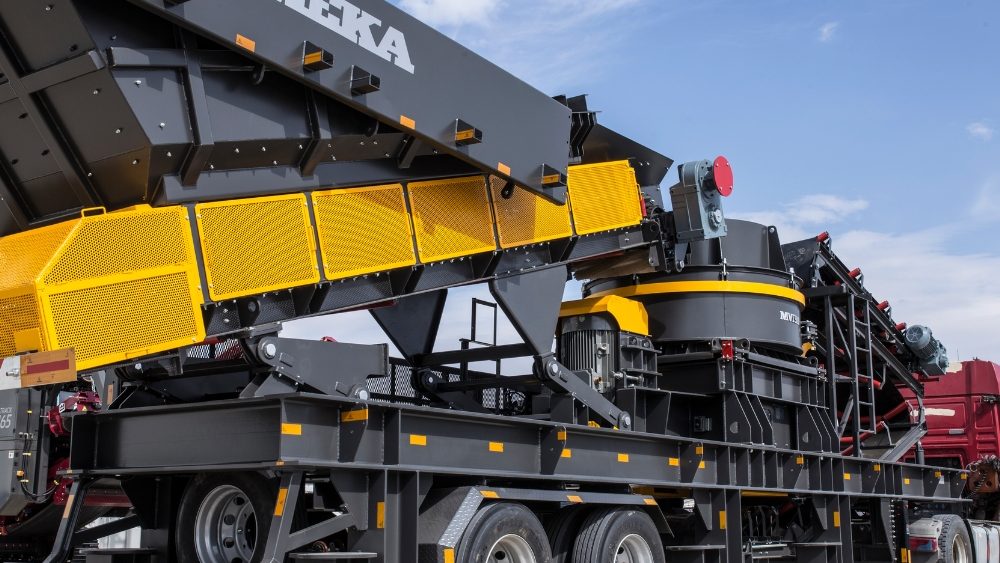

A heavy-machinery storage facility should be evaluated by the specific load: verified dimensions and weight, transport configuration, unloading and placement method, floor path, lifting information, condition, access, insurance, timing, and retrieval plan. A large building or industrial address does not by itself prove that a machine can be accepted safely.
Heavy machinery moves are expensive, interdependent, and difficult to improvise. A machine may fit the available floor area but fail at the trailer interface, doorway, turning route, lifting method, or final placement. The original version of this article relied on broad capacity claims. This updated guide uses a safer qualification process: provide the technical facts, ask the facility to confirm the method, and do not dispatch until responsibilities and conditions are documented.
Key Takeaways
- Verify transport dimensions and weight for the actual configuration.
- Provide drawings and photographs of lifting points, base, guards, attachments, and condition.
- Coordinate rigging, carrier, unloading, placement, access, and retrieval.
- Evaluate the complete route, not only the storage bay.
- Confirm capabilities and policies for the specific machine.
What Does Heavy Machinery Storage Mean?
Short answer: Heavy machinery storage is a planned arrangement for approved industrial equipment whose size, weight, value, configuration, or movement requires detailed review.
It differs from ordinary pallet or unit storage because safe feasibility depends on engineering and logistics information. The wording used in a search result can describe several very different property or service models, so a business should confirm the operating arrangement rather than relying on the label alone. Begin by writing a one-sentence description of the business problem, the assets involved, the desired start date, and the expected outcome. Assign an asset ID and gather current drawings, specifications, photographs, transport configuration, and technical contacts.
This distinction matters because a technically relevant building may still be operationally unsuitable. The facility and movement team need one consistent source of truth. Record whether the requirement is storage-only, whether work will occur on site, who needs access, and whether items will move in one delivery or several scheduled deliveries.
Planning caution: Do not rely on generic lifting-capacity statements or previous moves involving different machines.
For the next step, review machinery and heavy-equipment storage. Storage suitability, handling, access, insurance, terms, pricing, and availability must be confirmed directly before delivery.
Which Businesses and Situations Are a Good Fit?
Short answer: Potential candidates include approved production machines, processing equipment, tooling, industrial components, dealer equipment, surplus machinery, and assets awaiting installation, repair elsewhere, sale, or redeployment.
Suitability depends on the individual asset and proposed move. A useful inquiry describes the business purpose instead of asking only for a number of square feet. Group the requirement by asset type, operational urgency, sensitivity, and expected turnover. Explain current condition, storage purpose, destination, and any inspection need.
A clear fit assessment protects both the customer and facility from rushed assumptions. Context affects preparation, orientation, access, and duration. Record the owner of the goods, their condition, packaging or protection, approximate value, and any restrictions that could affect acceptance.
Planning caution: Leaking, contaminated, unstable, unidentified, hazardous, improperly prepared, or inadequately documented equipment requires additional review and may be declined.
For the next step, review the industrial equipment intake checklist. Storage suitability, handling, access, insurance, terms, pricing, and availability must be confirmed directly before delivery.
How Should Space and Item Dimensions Be Calculated?
Short answer: Use maximum transport length, width, height, verified weight, base dimensions, attachments, protrusions, centre of gravity where relevant, and handling clearances.
Floor area alone rarely describes an industrial requirement. Height, shape, centre of gravity, aisle clearance, packaging, protrusions, and the method used to position an item can change the practical footprint. Create an inventory with quantities and maximum dimensions, then identify which items can be stacked, nested, racked, or grouped. Identify which components are removed or shipped separately.
Accurate measurements support a realistic layout and prevent surprises at delivery. The travel envelope and lifting method can exceed the visible machine footprint. Record length, width, height, weight, quantity, packaging, photographs, lifting points, and any clearance required around each asset.
Planning caution: Estimated or nameplate-only information may not reflect modifications, tooling, bases, or packaging.
For the next step, review facility information. Storage suitability, handling, access, insurance, terms, pricing, and availability must be confirmed directly before delivery.
What Handling, Delivery and Access Details Must Be Confirmed?
Short answer: Review loading origin, carrier, trailer, orientation, securement, lifting points, rigging, unloading, floor route, placement, and reverse retrieval.
Handling is part of the storage plan, not an afterthought. Vehicle type, trailer configuration, loading orientation, lifting points, floor path, unloading sequence, and appointment timing can determine whether a proposed move is practical. Share the transportation plan early and identify the party responsible for loading, securement, rigging, unloading, placement, and later retrieval. Assign a qualified party to each movement and approval.
Coordinating these details reduces delays, double handling, and unsafe improvisation. A safe move requires coordinated responsibilities across organizations. Record carrier information, vehicle dimensions, arrival windows, lifting documentation, required personnel, and the proposed access frequency after move-in.
Planning caution: Confirm the facility’s available handling method for the exact equipment; do not assume cranes, forklifts, personnel, or appointments.
For the next step, review pricing and availability. Storage suitability, handling, access, insurance, terms, pricing, and availability must be confirmed directly before delivery.
How Should Security, Condition and Responsibility Be Reviewed?
Short answer: Document condition, openings, controls, loose parts, fluids, batteries, corrosion risk, packaging, covers, ownership, insurance, and authorized contacts.
Security is broader than cameras or locks. A business also needs a documented inventory, condition photographs, named contacts, controlled access expectations, and a clear understanding of responsibility before, during, and after delivery. Discuss the sensitivity of the stored items, required environmental protection, packaging, inspection needs, insurance documentation, and emergency contacts. Use dated photographs and manufacturer or qualified technical preparation guidance.
A written record gives both parties a consistent reference if conditions, personnel, or timelines change. Idle equipment can deteriorate or become difficult to recommission if preparation is incomplete. Record serial numbers where appropriate, visible condition, packaging status, ownership documents, insurance contacts, and any special instructions supplied by the owner.
Planning caution: The storage provider should not be expected to invent preservation procedures for specialized machinery.
For the next step, review maintenance and contractor storage. Storage suitability, handling, access, insurance, terms, pricing, and availability must be confirmed directly before delivery.
How Should Timing and Access Be Planned?
Short answer: Coordinate removal, storage, inspections, sale or installation, destination readiness, carrier availability, and retrieval.
The expected duration is only one timing factor. A facility also needs to understand the move-in window, delivery sequence, requested access, potential extensions, retrieval notice, and dependencies such as a project milestone or carrier booking. Build a simple schedule with decision dates, delivery dates, review points, and the expected removal window. Create a review date and extension decision before the planned removal.
A shared timeline makes capacity planning more reliable and helps the business avoid paying for rushed logistics. Machinery projects often change when construction, utilities, permits, buyers, or installers are delayed. Record the earliest and latest acceptable move-in date, expected duration, access frequency, notice requirements to discuss, and the person authorized to approve changes.
Planning caution: Availability and extensions must be confirmed.
For the next step, review the Cambridge industrial storage location. Storage suitability, handling, access, insurance, terms, pricing, and availability must be confirmed directly before delivery.
What Factors Affect Pricing and the Final Storage Plan?
Short answer: Machinery storage pricing can depend on practical footprint, weight and configuration, movements, handling, duration, access, documentation, and capacity.
A meaningful quotation depends on the complete requirement. Two customers asking for the same nominal floor area may require different handling, layouts, access arrangements, administration, protection, or duration. Request pricing only after providing the inventory, schedule, handling plan, access expectations, and unresolved questions. Provide verified technical data and distinguish included work from customer or contractor responsibilities.
This produces a more useful consultation than comparing a single advertised rate that may not represent the actual requirement. A complete quotation reduces later changes and rebooking. Record what is included, what requires separate coordination, the assumptions used for the quotation, and the process for approving a change.
Planning caution: Do not compare offers by square footage alone.
For the next step, review a machinery storage review. Storage suitability, handling, access, insurance, terms, pricing, and availability must be confirmed directly before delivery.
Heavy Machinery Storage Evaluation Matrix
Every row should be supported by current technical information.
| Area | Questions | Evidence |
|---|---|---|
| Identity | What is the exact asset and configuration? | Nameplate, serial, drawings, photographs |
| Physical | What are transport dimensions and verified weight? | Drawing, scale or manufacturer record |
| Movement | How is it lifted, loaded, secured, unloaded, and placed? | Rigging and transport plan |
| Condition | What preparation or sensitivities apply? | Inspection and technical instructions |
| Project | Why is it stored and what releases it? | Schedule, destination, responsible contacts |
Heavy Machinery Storage Scenarios
The storage purpose changes the planning details.
Awaiting Installation
Situation: A new or relocated machine arrives before the destination is ready. Planning response: Coordinate delivery configuration with the later installation move. Why it matters: Storage should preserve the final logistics plan.
Surplus Equipment
Situation: A machine is held during sale or redeployment. Planning response: Document ownership, condition, inspection access, and release authorization. Why it matters: Commercial decisions may change during storage.
Shutdown Project
Situation: Equipment is removed temporarily during plant work. Planning response: Connect storage and retrieval to the shutdown schedule. Why it matters: Restart dates can be time critical.
Dealer Inventory
Situation: Multiple machines have different customers or status. Planning response: Use separate asset records and authorized release instructions. Why it matters: Inventory identity must remain clear.
Heavy Machinery Facility Review Checklist
Use this list with engineering, logistics, insurance, and project teams.
- Define the business reason for heavy machinery storage and the desired outcome.
- Prepare a complete inventory rather than describing only the largest item.
- Record maximum dimensions and verified weights for machinery or oversized assets.
- Provide photographs that show condition, packaging, lifting points, and protrusions.
- Describe the delivery vehicle, trailer configuration, carrier, and unloading sequence.
- Identify who is responsible for rigging, loading, transportation, unloading, and placement.
- Explain how often authorized personnel may need access and what they need to do.
- Share expected move-in, review, extension, and removal dates.
- Ask which insurance, ownership, condition, and responsibility documents are required.
- Obtain written confirmation of suitability, policies, pricing, handling, access, and availability before dispatch.
A complete request helps the facility assess fit without guessing. If information is not yet available, identify what remains unknown and arrange a consultation through the pricing and availability page.
Frequently Asked Questions
Is heavy machinery storage the same as renting a warehouse?
No. Heavy-machinery storage does not automatically include production, testing, repairs, demonstrations, employee workspace, or unrestricted access.
What information should a business provide first?
Provide the item types, quantities, dimensions, weights where relevant, photographs, delivery method, desired dates, access expectations, handling needs, and a business contact. The facility can then identify missing information and discuss whether the request may be suitable.
Can pricing be confirmed from square footage alone?
Usually not. Pricing can depend on footprint, configuration, duration, handling, access, administration, item characteristics, and current capacity. Contact Industrial Space Rentals with the complete requirement for a tailored discussion.
Can customers access stored items whenever they want?
Access arrangements must be discussed and confirmed for the specific storage plan. Do not assume that storage provides unrestricted daily workspace, operating access, or walk-in retrieval.
What items or conditions may not be accepted?
Suitability is reviewed individually. Provide accurate information about contents, ownership, condition, dimensions, weight, packaging, hazards, insurance, handling, and access. The team will explain applicable conditions and policies before delivery.
How far in advance should a company inquire?
Begin before riggers and carriers are committed. Complex, oversized, modified, or unfamiliar equipment requires additional review time.
Serving Industrial and Commercial Organizations Across Southern Ontario
Industrial Space Rentals is located at 200 Beverly Street in Cambridge, Ontario. The facility serves qualified organizations from Cambridge, Kitchener, Waterloo, Guelph, Hamilton, Burlington, Brampton, Mississauga, London, and other Ontario markets when the storage requirement fits the facility. Start with the Cambridge industrial storage page, explore who we serve, and contact the team to confirm conditions and policies.
Discuss Your Storage Requirement
Send verified dimensions and weight, drawings, photographs, lifting information, condition, carrier and rigging plan, requested dates, access, insurance, and retrieval destination. Call (416) 707-0326 or (647) 209-4027, or use the contact form to request a consultation.